
“...Marin, when measured by acres, appears insignificant, but when estimated by the beauty and diversity of its scenery stands unique, apart, alone.”—Helen Bingham, In Tamal Land, 1906“Of all the places of the world which I have visited; Northern California, and especially Marin County is, in my opinion, the real paradise on earth.“
- Jack London
The Marin History Museum has long accepted works of art. The collection today is a mix of mediums—from 19th century needlepoint to 1970s batik—from artist well-known to unknown. This exhibit highlights the best of the museum’s paintings, including a selection of works from a recent donation of 36 paintings by Thaddeus and Ludmilla Pilat Welch.
You can purchase digital copies of these images at You can purchase digital copies of these images at https://www.marinhistory.org/research/purchasephoto/. Please reference the Photo ID number when ordering.
The word “muse” comes from the ancient Greek mousa, referring to nine sister-goddesses believed to be the source of inspiration for artists and poets. Through centuries and languages, muse has retained its meaning as a catalyst for creative expression. Like an artist marks their work by signing it, Marin leaves its mark on those who are captured by its beauty—entranced to preserve it forever.
You can purchase digital copies of these images at You can purchase digital copies of these images at https://www.marinhistory.org/research/purchasephoto/. Please reference the Photo ID number when ordering.
Steamboat Saucelito, c. 1877
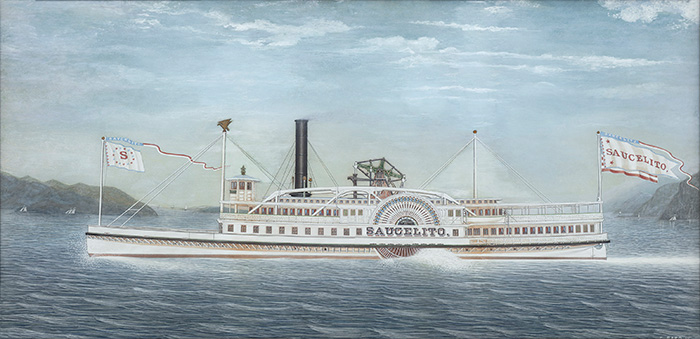
James Bard (American, 1815–1897)
Gouache on paper
Marin History Museum Collection, 1999.309
James Bard produced his first maritime painting in 1827 at the age of twelve, a collaboration with his twin brother John. The brothers continued to cosign works “J & J Bard” through 1849, after which John disappears from record.
As shipbuilding flourished during the 1850s, Bard received many commissions from important shipbuilders, owners, and captains. He was known to frequent shipyards to take measurements and record the colors of vessels under construction to prepare for his detailed paintings.
It is estimated that Bard created over 3,000 paintings and drawings of steamboats during his lifetime. Despite his prolificacy, his work was nearly forgotten by the time of his death. He was the subject of a single obituary, written by fellow marine artist Samuel Ward Stanton.
Gouache on paper
Marin History Museum Collection, 1999.309
James Bard produced his first maritime painting in 1827 at the age of twelve, a collaboration with his twin brother John. The brothers continued to cosign works “J & J Bard” through 1849, after which John disappears from record.
As shipbuilding flourished during the 1850s, Bard received many commissions from important shipbuilders, owners, and captains. He was known to frequent shipyards to take measurements and record the colors of vessels under construction to prepare for his detailed paintings.
It is estimated that Bard created over 3,000 paintings and drawings of steamboats during his lifetime. Despite his prolificacy, his work was nearly forgotten by the time of his death. He was the subject of a single obituary, written by fellow marine artist Samuel Ward Stanton.
Olema, 1938
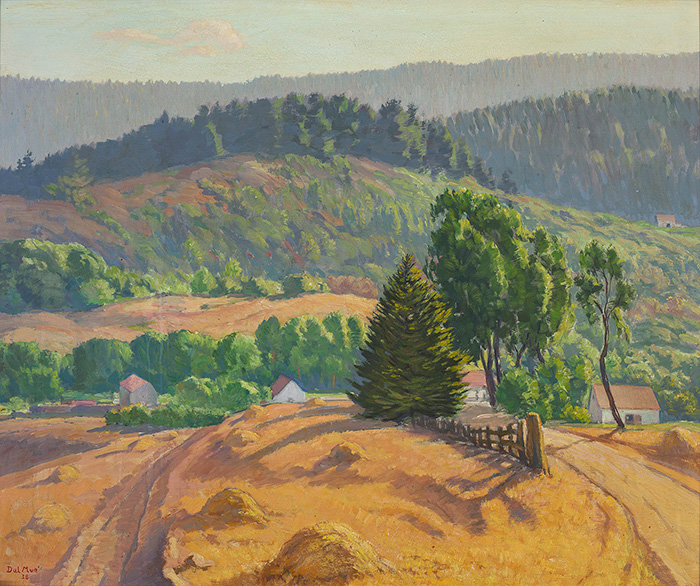
Maurice del Mue (French-born American, 1875–1955)
Oil on canvas
Marin History Museum Collection, 1999.425
Del Mue worked as staff artist for San Francisco’s Call and Chronicle newspapers during the 1920s while painting at his easel. During the Depression, he was hired by the WPA to create four murals for Marin County institutions. Del Mue is best known for his landscape paintings in soft, subdued tones, including a favorite shade of blue he light-heartedly coined “del Mue blue.”
Oil on canvas
Marin History Museum Collection, 1999.425
Del Mue worked as staff artist for San Francisco’s Call and Chronicle newspapers during the 1920s while painting at his easel. During the Depression, he was hired by the WPA to create four murals for Marin County institutions. Del Mue is best known for his landscape paintings in soft, subdued tones, including a favorite shade of blue he light-heartedly coined “del Mue blue.”
Tomales Bay, c. 1900
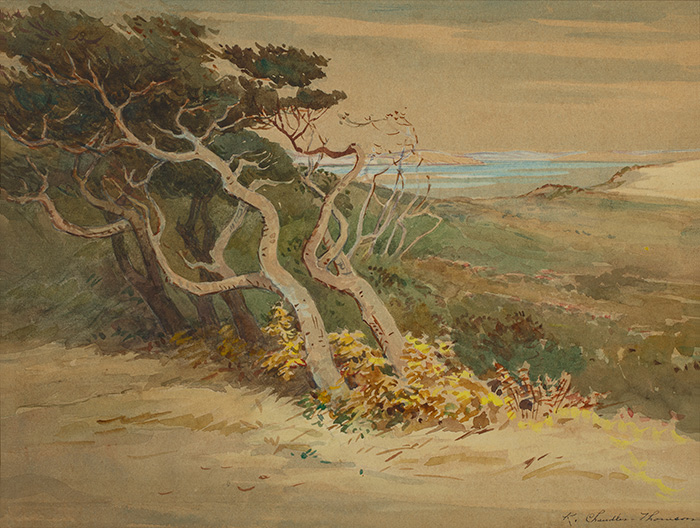
Kate Chandler-Thomson (American, 1870–1948)
Watercolor on paper
Marin History Museum Collection, 1999.1090
San Francisco-born Kate Chandler-Thomson received formal art education throughout the 1880s and later opened a painting studio in Lower Nob Hill. After a stint in Paris, Chandler-Thomson lived in London, where she became known for her watercolor paintings of flowers and European cities. In 1932, she sold one of her paintings to the Queen of England. Chandler-Thomson returned to California after the Blitz, living the rest of her life in Mill Valley.
Watercolor on paper
Marin History Museum Collection, 1999.1090
San Francisco-born Kate Chandler-Thomson received formal art education throughout the 1880s and later opened a painting studio in Lower Nob Hill. After a stint in Paris, Chandler-Thomson lived in London, where she became known for her watercolor paintings of flowers and European cities. In 1932, she sold one of her paintings to the Queen of England. Chandler-Thomson returned to California after the Blitz, living the rest of her life in Mill Valley.
Saint Mary’s Church, Nicasio, n.d.
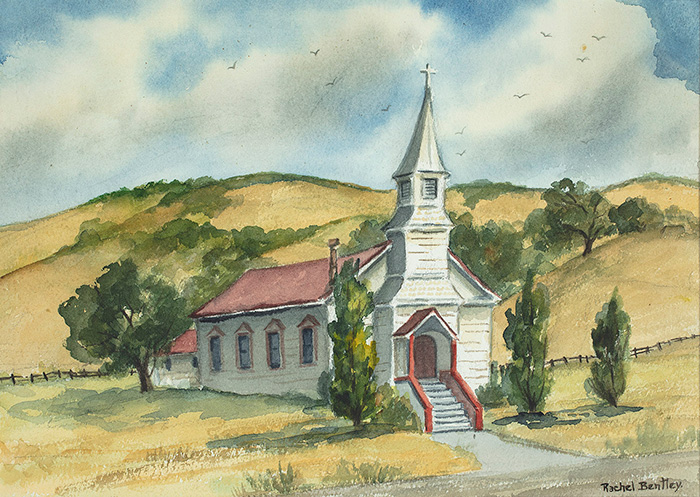
Rachel Bentley (British-born American, 1894–1991)
Watercolor on paper
Gift of Charmaine Burdell
Marin History Museum Collection, 2024.17.116
Rachel Bentley received widespread acclaim as a watercolor artist in 1954 when 100 of her one-room schoolhouse paintings were exhibited at the California State Fair. Her hunt for historic sites and buildings took her far into California’s back country. She painted in 31 counties, often setting up her easel in open fields amid curious cattle. Later commissions took her to old mining towns in California and Nevada to document the ruins of the Gold Rush and Comstock Lode.
Watercolor on paper
Gift of Charmaine Burdell
Marin History Museum Collection, 2024.17.116
Rachel Bentley received widespread acclaim as a watercolor artist in 1954 when 100 of her one-room schoolhouse paintings were exhibited at the California State Fair. Her hunt for historic sites and buildings took her far into California’s back country. She painted in 31 counties, often setting up her easel in open fields amid curious cattle. Later commissions took her to old mining towns in California and Nevada to document the ruins of the Gold Rush and Comstock Lode.
Mount Tamalpais and Corte Madera Creek, 1900
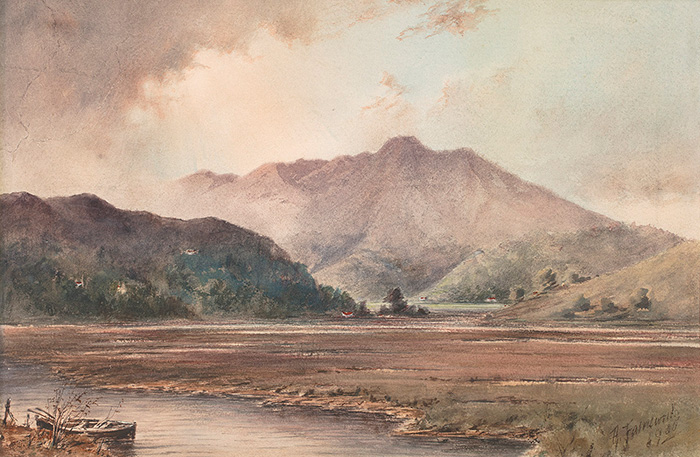
Alfred Villiers Farnsworth (English-born American, 1858–1908)
Watercolor on paper
Gift of Charmaine Burdell
Marin History Museum Collection, 2024.17.115
Alfred Villiers Farnsworth began painting luminous watercolor landscapes while working as a staff artist at the San Francisco Examiner during the 1890s. He later moved across the Golden Gate to Marin County, living in San Anselmo, San Rafael, and Stinson Beach. In Marin, he sometimes painted alongside fellow artists Thaddeus Welch and Louis Rea. He died at age 50 in San Francisco’s Adler Sanitarium.
Watercolor on paper
Gift of Charmaine Burdell
Marin History Museum Collection, 2024.17.115
Alfred Villiers Farnsworth began painting luminous watercolor landscapes while working as a staff artist at the San Francisco Examiner during the 1890s. He later moved across the Golden Gate to Marin County, living in San Anselmo, San Rafael, and Stinson Beach. In Marin, he sometimes painted alongside fellow artists Thaddeus Welch and Louis Rea. He died at age 50 in San Francisco’s Adler Sanitarium.
Thaddeus Welch and Ludmilla Pilat Welch, “Bohemians of the Brush”
Ludmilla Pilat first met Thaddeus Welch when she found him sketching near her family’s Hudson Valley home. Thaddeus had recently returned to the US after studying painting in Munich and living for a time on a houseboat on the Seine. He became friendly with the Pilats, and subsequently Ludmilla’s painting teacher. As Ludmilla turned 16 in 1883, the two married. Thaddeus was 39.
In 1894, the Welches moved to Marin County, building a small cabin-studio on Mt. Tamalpais at Steep Ravine. From their perch in the redwoods the couple painted vigorously, developing a similar style. Their favorite sketching trips took them over the Lone Tree (now Dipsea) and other trails west to Bolinas, where they drew inspiration from the wild landscape.
The turn of the 20th century brought interest in Thaddeus’ work. He began exhibiting in commercial galleries and at the elite Bohemian Club, garnering praise from both collectors and critics. Even as demand for his paintings increased, the couple continued to live a secluded, simple life. In 1902, they moved to San Geronimo, and then to Santa Barbara in 1905.
Upon Thaddeus’ death, the SF Chronicle printed: “It is through the work of Welch that the country surrounding Mount Tamalpais became famous throughout the United States.” Ludmilla continued to paint landscapes, with special interest in old adobes, until her death six years later. Today, a small grove of calla lilies is all that marks the location of their cabin in the woods.
In 1894, the Welches moved to Marin County, building a small cabin-studio on Mt. Tamalpais at Steep Ravine. From their perch in the redwoods the couple painted vigorously, developing a similar style. Their favorite sketching trips took them over the Lone Tree (now Dipsea) and other trails west to Bolinas, where they drew inspiration from the wild landscape.
The turn of the 20th century brought interest in Thaddeus’ work. He began exhibiting in commercial galleries and at the elite Bohemian Club, garnering praise from both collectors and critics. Even as demand for his paintings increased, the couple continued to live a secluded, simple life. In 1902, they moved to San Geronimo, and then to Santa Barbara in 1905.
Upon Thaddeus’ death, the SF Chronicle printed: “It is through the work of Welch that the country surrounding Mount Tamalpais became famous throughout the United States.” Ludmilla continued to paint landscapes, with special interest in old adobes, until her death six years later. Today, a small grove of calla lilies is all that marks the location of their cabin in the woods.
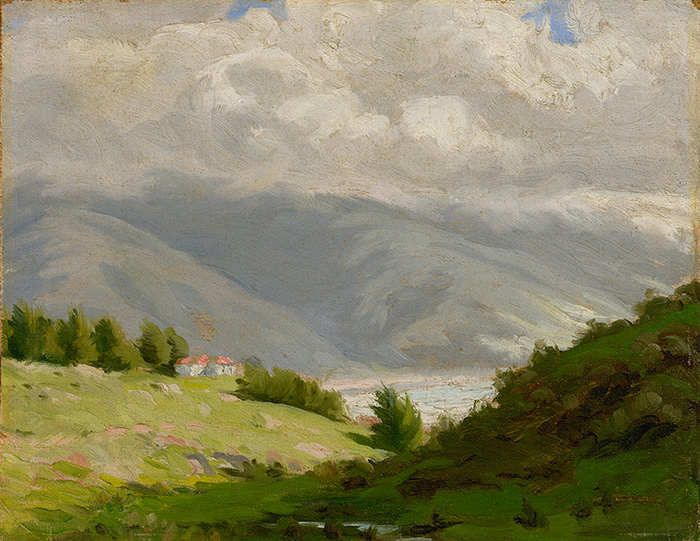
Thaddeus Welch (American, 1844–1919)
Bolinas, c. 1900
Oil on canvas
Gift of Peter Y. Pilat Marin History Museum Collection, 2017.12.8
Bolinas, c. 1900
Oil on canvas
Gift of Peter Y. Pilat Marin History Museum Collection, 2017.12.8
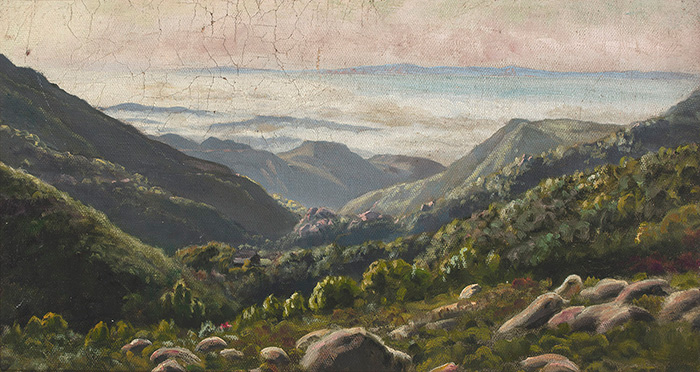
Thaddeus Welch (American, 1844–1919)
Pacific Ocean through Valley, c. 1900
Oil on canvas Gift of Peter Y. Pilat
Marin History Museum Collection, 2017.12.17
Pacific Ocean through Valley, c. 1900
Oil on canvas Gift of Peter Y. Pilat
Marin History Museum Collection, 2017.12.17
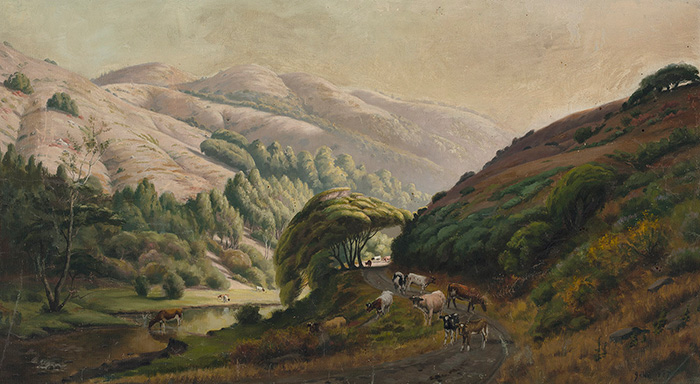
Ludmilla Pilat Welch (American, 1867–1925)
Unidentified, 1907
Oil on canvas Gift of Peter Y. Pilat
Marin History Museum Collection, 2017.12.7
Unidentified, 1907
Oil on canvas Gift of Peter Y. Pilat
Marin History Museum Collection, 2017.12.7
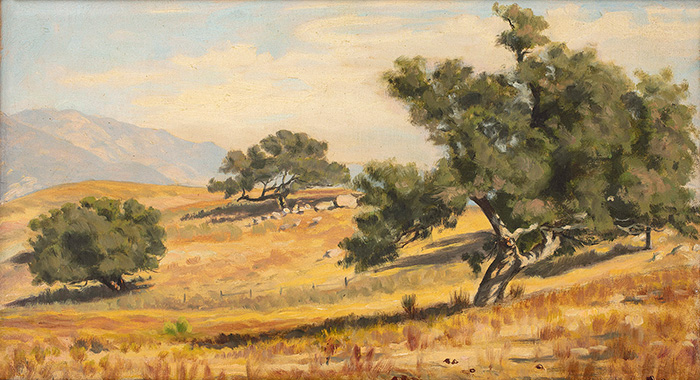
Ludmilla Pilat Welch (American, 1867–1925)
Unidentified, c. 1900
Oil on canvas
Gift of Peter Y. Pilat
Marin History Museum Collection, 2017.12.11
Unidentified, c. 1900
Oil on canvas
Gift of Peter Y. Pilat
Marin History Museum Collection, 2017.12.11
Angel Island from Tiburon, 1890
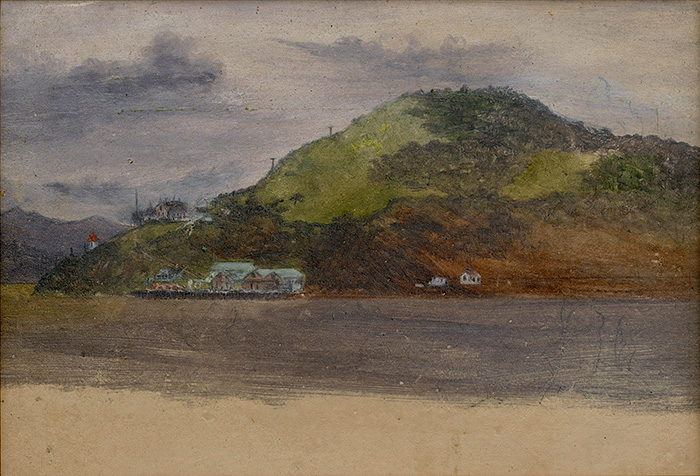
A. Van Male
Oil on canvas
Gift of Charmaine Burdell
Marin History Museum, 1999.1109
Oil on canvas
Gift of Charmaine Burdell
Marin History Museum, 1999.1109
Sausalito and Tiburon from the Bay, 1890
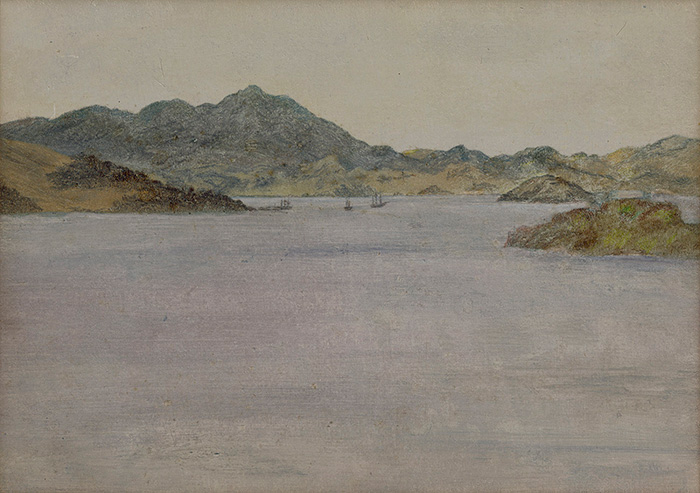
A. Van Male
Oil on canvas
Gift of Charmaine Burdell
Marin History Museum, 1999.1110
View of Mount Tamalpais, n.d.
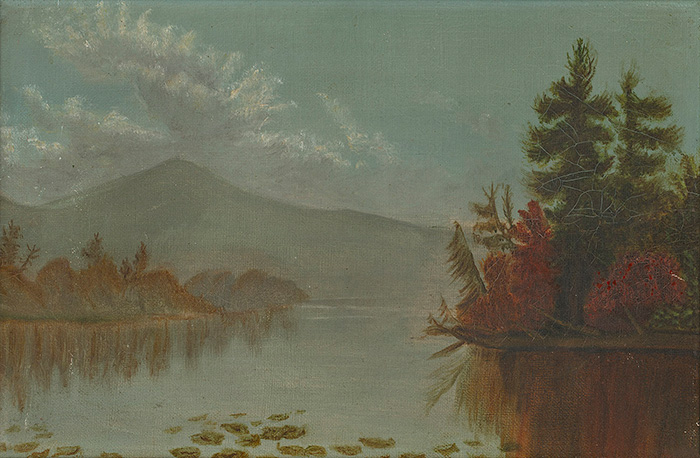
Artist once known
Oil on canvas
Gift of Jeff Craemer
Marin History Museum Collection, 2011.1.280
Oil on canvas
Gift of Jeff Craemer
Marin History Museum Collection, 2011.1.280
Mount Tamalpais from Kentfield, n.d.
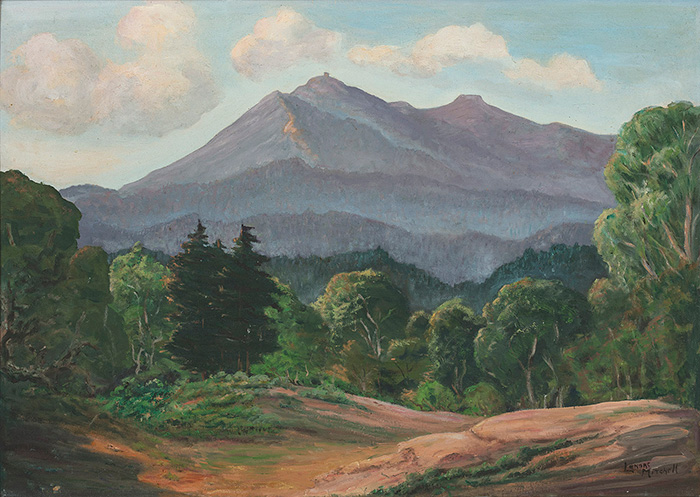
Lenore Mitchell
Oil on board
Marin History Museum Collection, 1999.427
Oil on board
Marin History Museum Collection, 1999.427
Mission San Rafael Arcangel, 1932
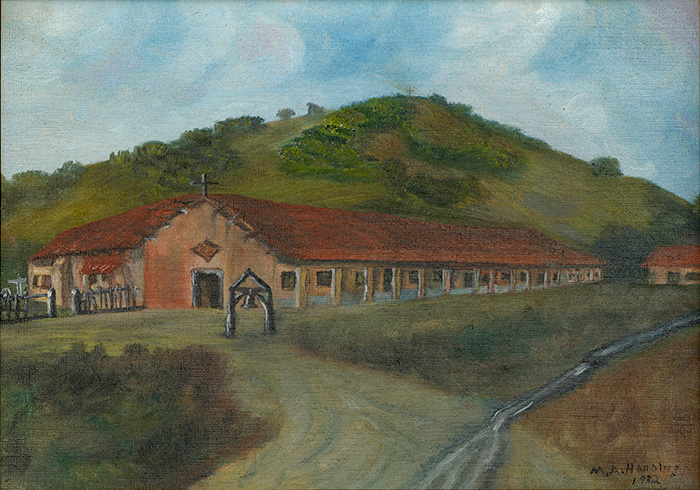
M.A. Harding
Oil on canvas
Marin History Museum Collection, 1999.196
Oil on canvas
Marin History Museum Collection, 1999.196
Mission San Rafael Arcangel, n.d.
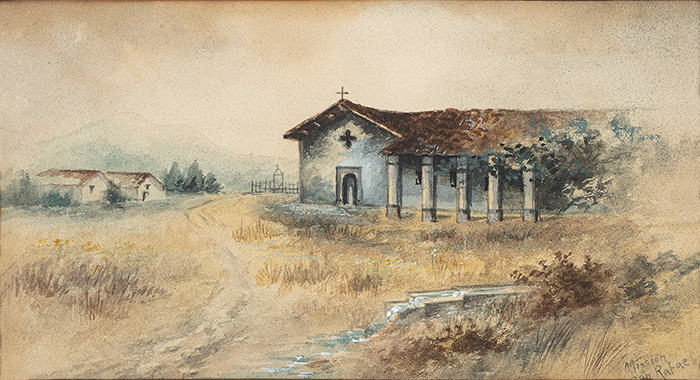
Artist once known
Watercolor on paper
Marin History Museum Collection, 1999.1093
Watercolor on paper
Marin History Museum Collection, 1999.1093
Mission San Rafael Arcangel, n.d.
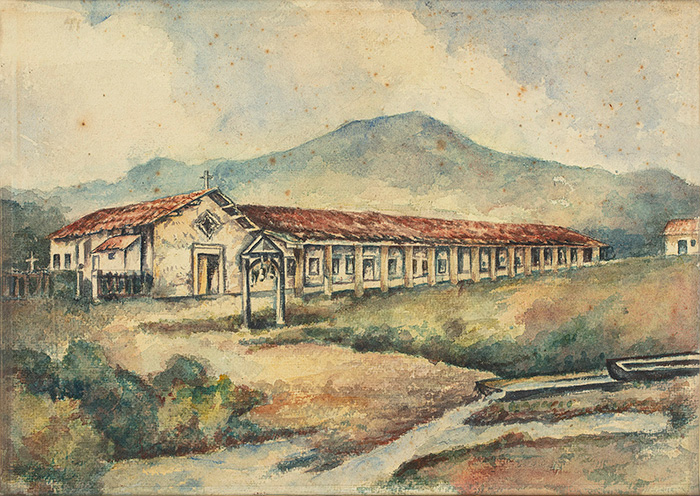
Artist once known
Watercolor on paper
Marin History Museum Collection, 2011.1.131
Watercolor on paper
Marin History Museum Collection, 2011.1.131
Boyd Gate House, n.d.
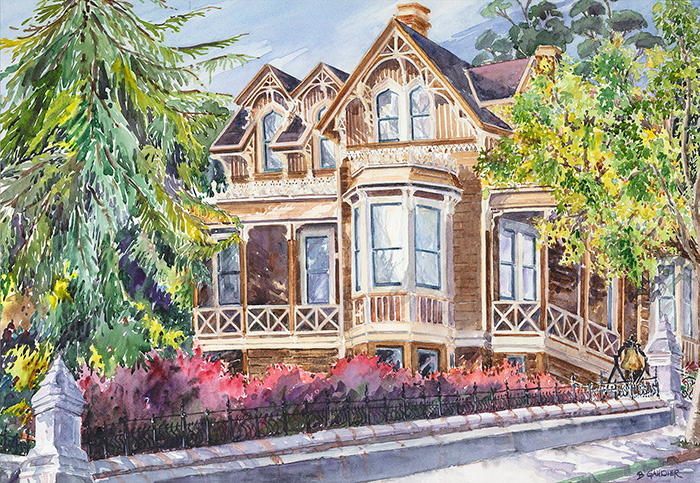
Benita Gaudier (American, b. 1946)
Watercolor on paper
Gift of the artist
Marin History Museum Collection, 2007.4.1
Watercolor on paper
Gift of the artist
Marin History Museum Collection, 2007.4.1
Hillside Midsummer at Pt. Reyes Station, 1982
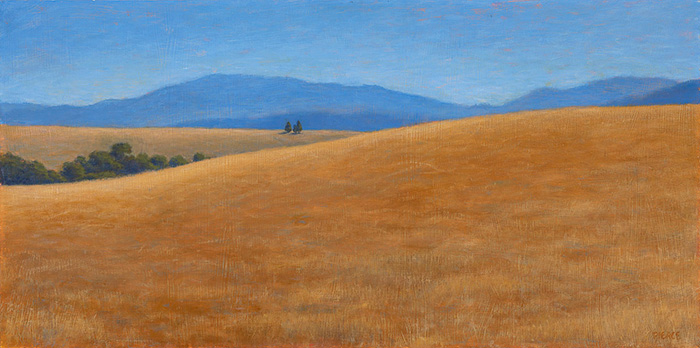
Barbara Pierce
Acrylic on canvas
Gift of Joan Murphy
Marin History Museum Collection, 2021.24.1
Acrylic on canvas
Gift of Joan Murphy
Marin History Museum Collection, 2021.24.1
Spring Day, Nicasio, 1981
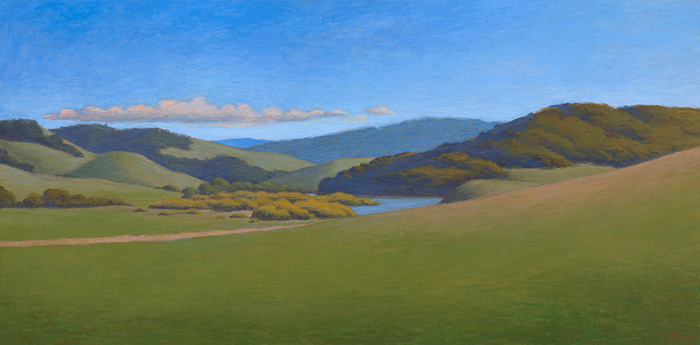
Barbara Pierce
Acrylic on canvas
Gift of Joan Murphy
Marin History Museum Collection, 2021.24.2
Acrylic on canvas
Gift of Joan Murphy
Marin History Museum Collection, 2021.24.2
The Owl in Bolinas Channel, 1970
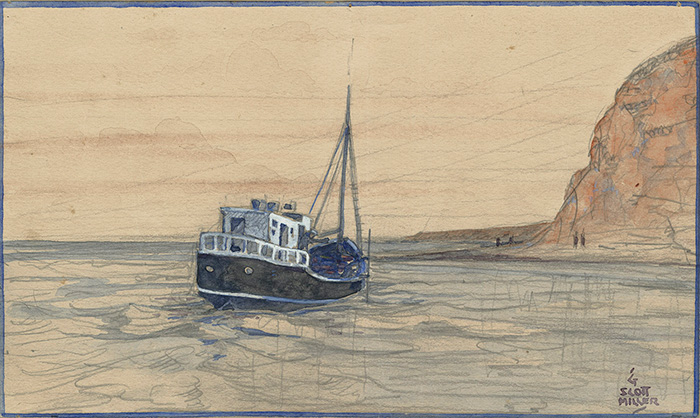
G. Scott Miller
Watercolor on paper
Marin History Museum Collection, 1999.1095
Watercolor on paper
Marin History Museum Collection, 1999.1095
Lyford House, Tiburon, n.d.
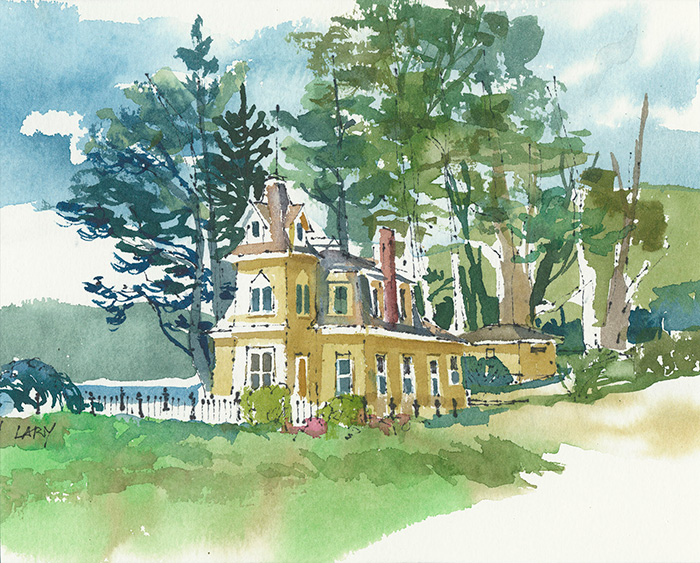
Bill Lary (American, 1925–2023)
Watercolor on paper
Gift of Sylvia Certo
Marin History Museum Collection, 2023.31.43
Watercolor on paper
Gift of Sylvia Certo
Marin History Museum Collection, 2023.31.43
Nicasio School, 1961
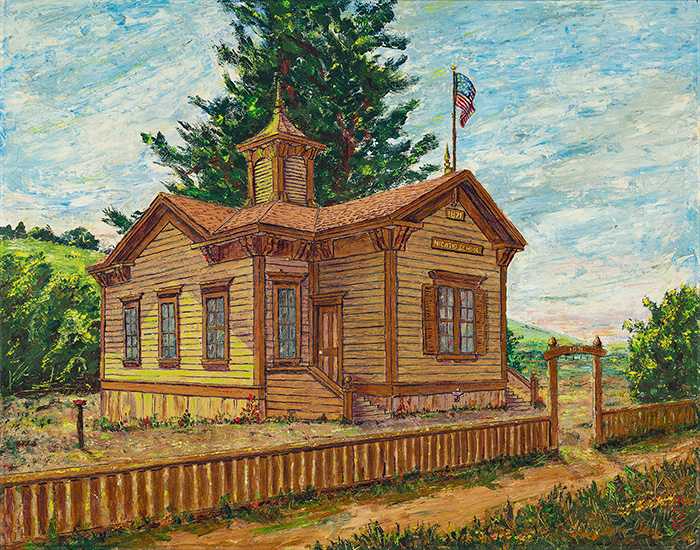
Mary Schultz Engelhart
Oil on canvas
Gift of the Lucretia Little History Room, Mill Valley
Marin History Museum Collection, 1999.2786
Oil on canvas
Gift of the Lucretia Little History Room, Mill Valley
Marin History Museum Collection, 1999.2786